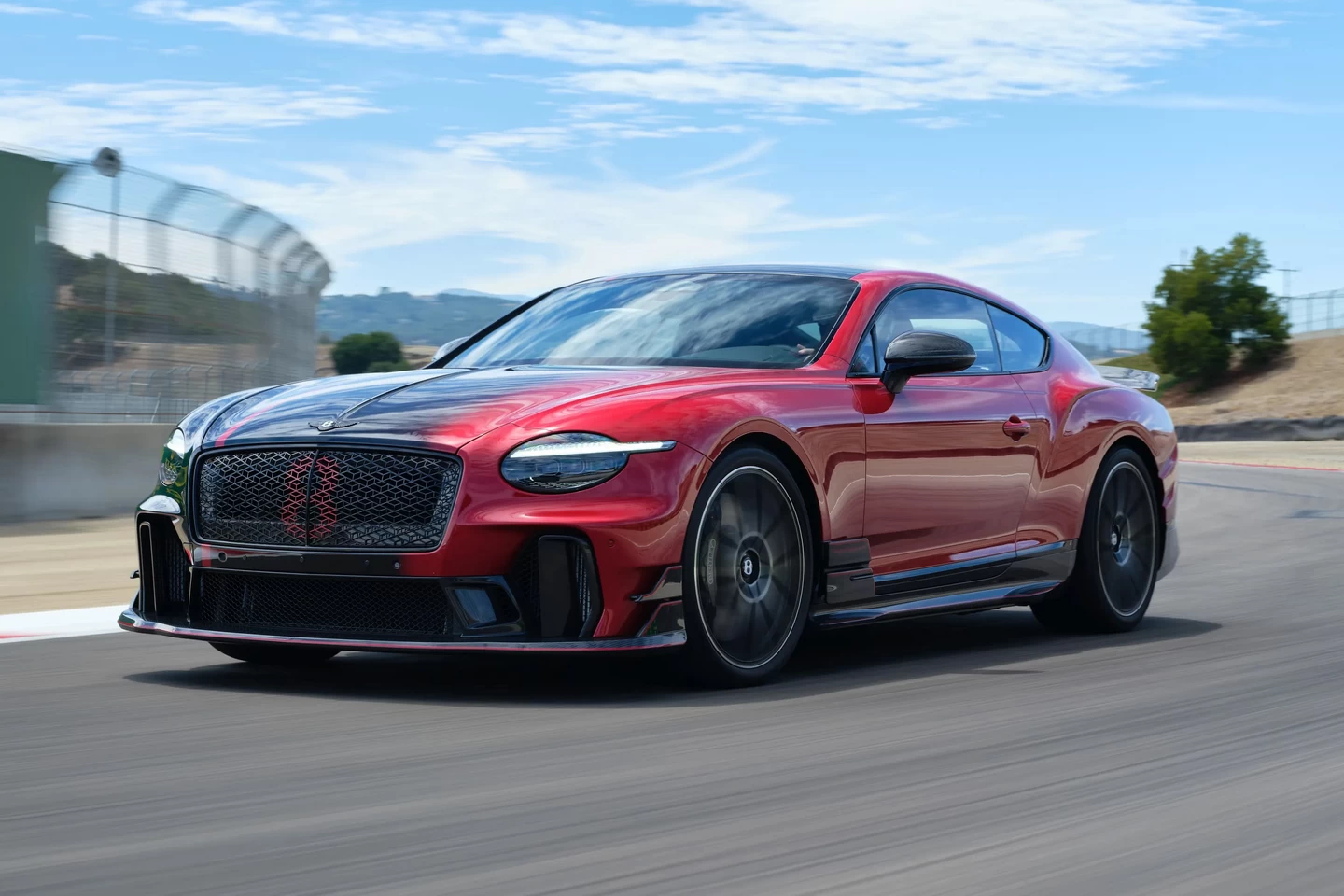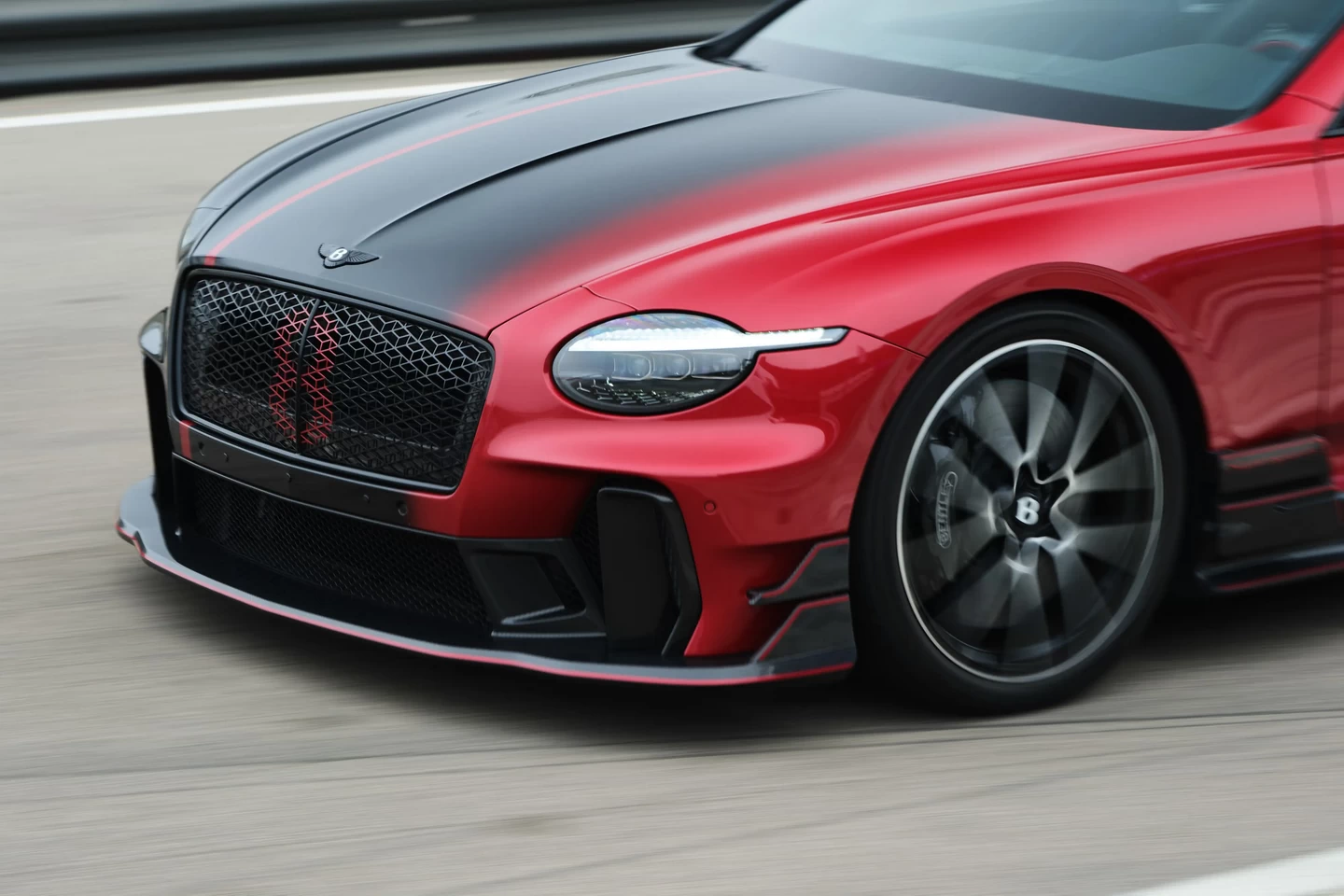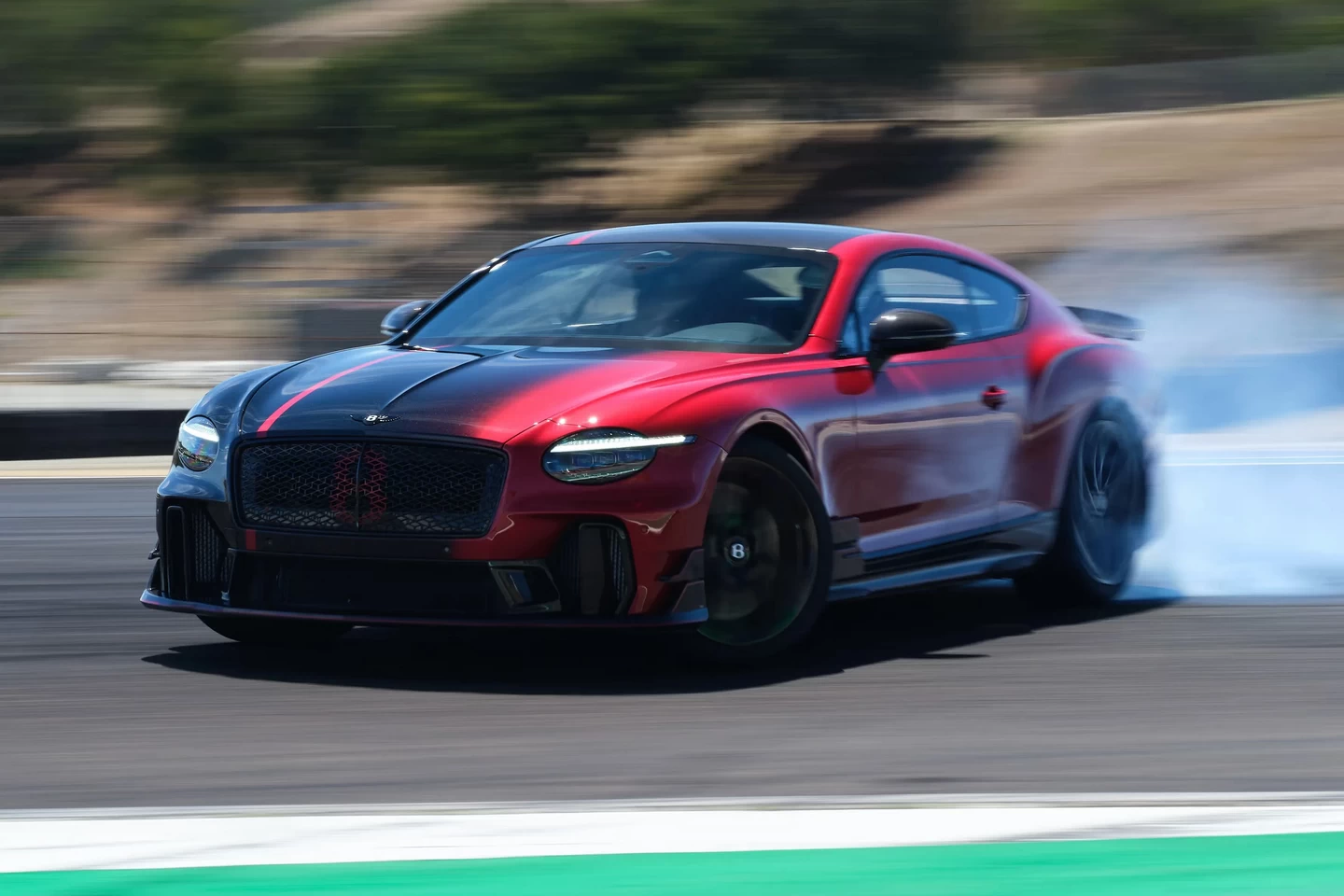
The posh confines of most Bentleys make it easy to forget about the English luxury brand’s storied motorsports history. Yet drive the new Continental GT–based2027 Supersports, with its street-fighter stance and chest-thumping exhaust note, and that heritage seems much closer at hand. As the company’s most driver-focused car to date, it forces you to reconsider big Bentley coupes in a more purposeful light.
ContemporaryBentley Continentals, the first of which debuted for 2003, have always been respectably athletic given their luxury-first mission. Two generations of mildly enhanced Conti Supersports have come before. There was even a more hardcoreGT3-R modelin the mid-2010s that paid homage to the brand’s sports-car racers of the period. This new Supersports, however, turns things up a notch or three, to the point that it ditches the Continental moniker altogether.
Business First
Gone are the driven front axles and bulky plug-in hybrid systems of its pedestrian kin, replaced by a straightforward rear-wheel-drive layout with pure internal-combustion power. That’s no small engineering feat, but it is the main contributor to the half-ton or so in weight that the Superports lost during its fire-and-brimstone transformation. We reckon that translates to a roughly 4500-pound Bentley—still stocky, but only a couple hundred pounds heavier than, say, aMercedes-AMG GT63 coupe.
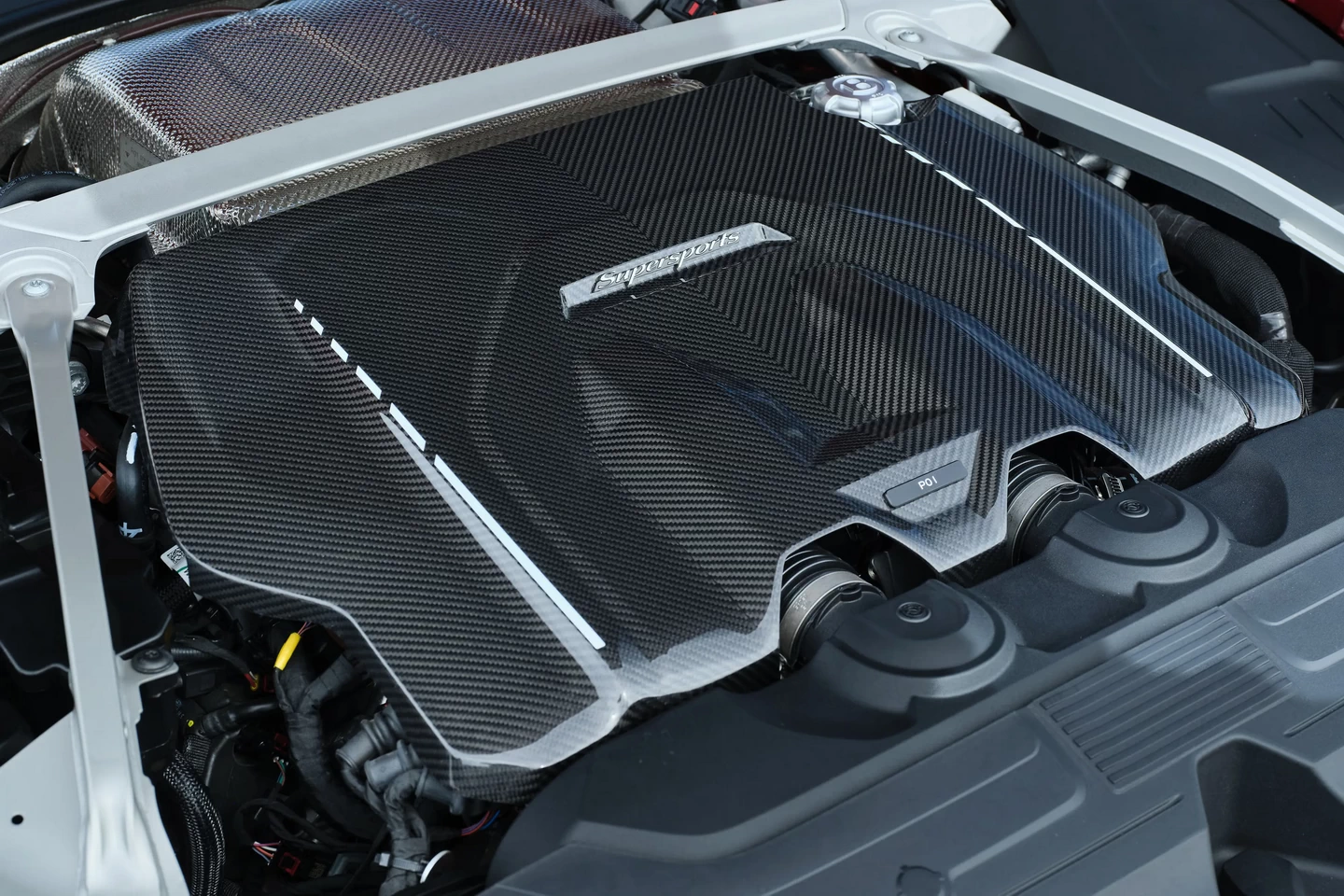
Under the hood is a familiar twin-turbocharged 4.0-liter V-8 lashed to an eight-speed dual-clutch automatic. Yet, whereas this engine makes less than 600 ponies in other Continentals, the Supersports flexes 657 horsepower and 590 pound-feet of torque, thanks to bigger turbos and the addition of variable valve timing, among other tweaks. A revised electronically controlled limited-slip differential, updated stability control programming, and a 0.6-inch-wider rear track help to manage that grunt. Still, due to its hybrid brethren’s all-wheel-drive traction and electrically assisted outputs that can reach 771 horses, we estimate the Supersports will need roughly a half-second longer to hit 60 mph, or about 3.5 seconds.
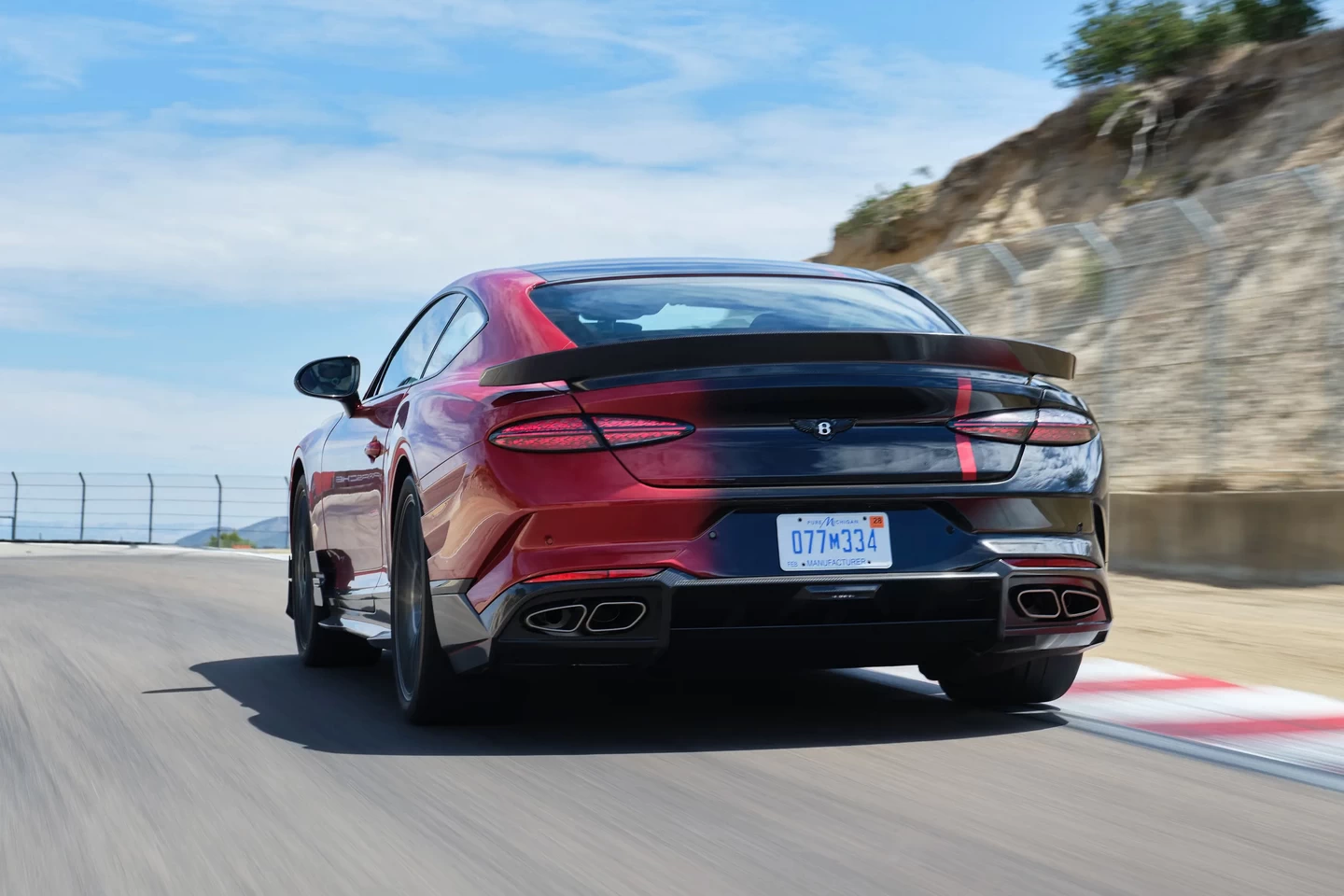
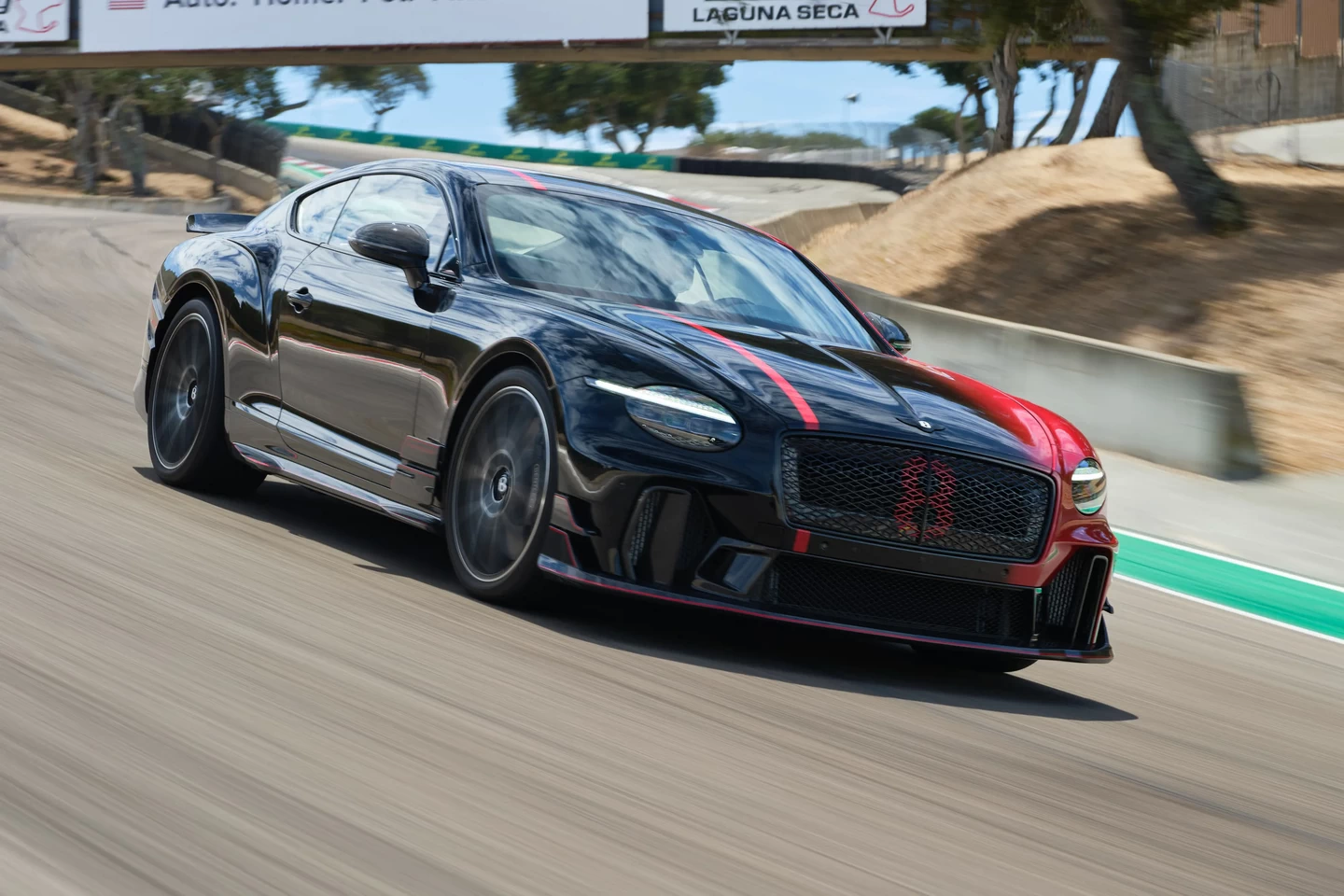
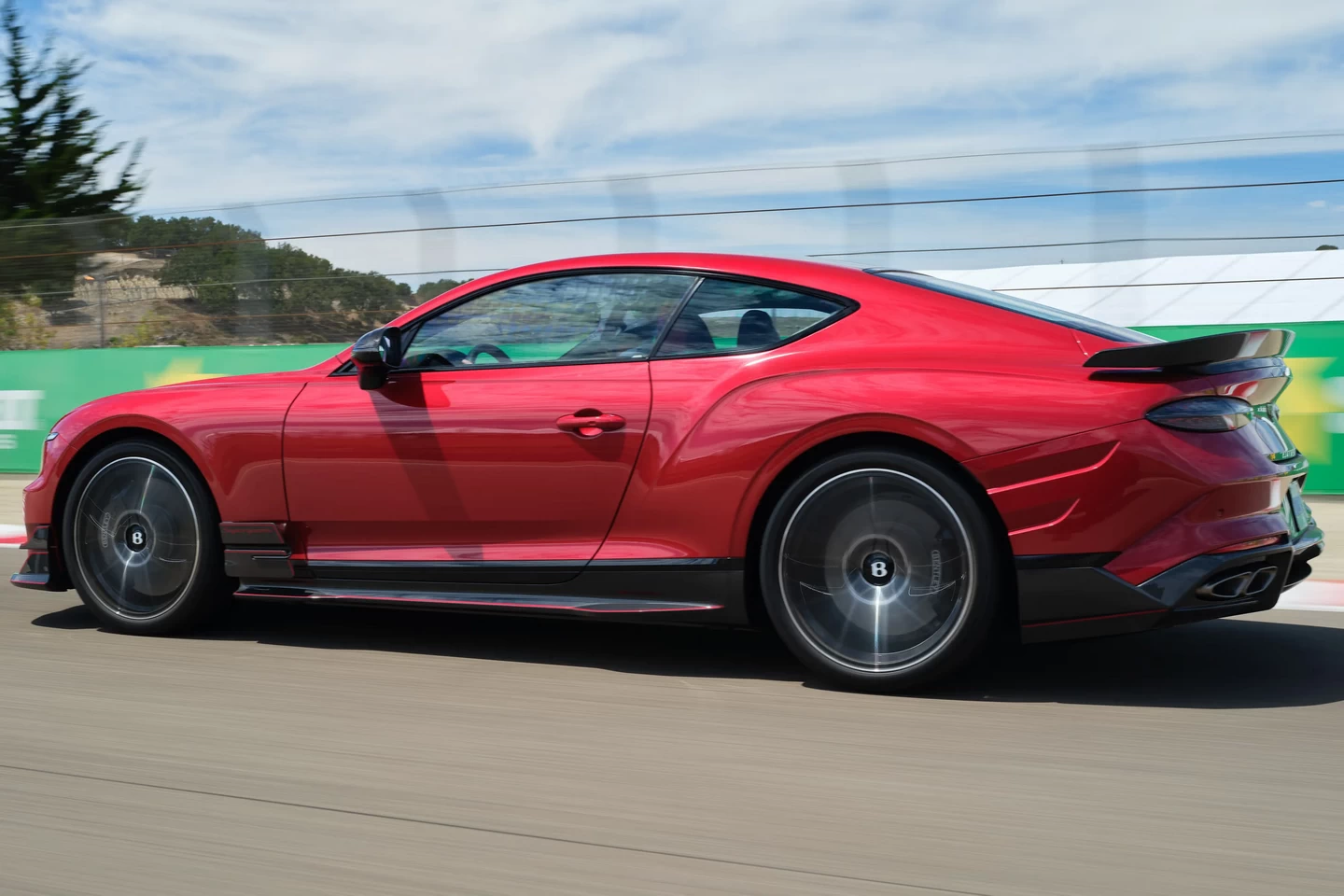
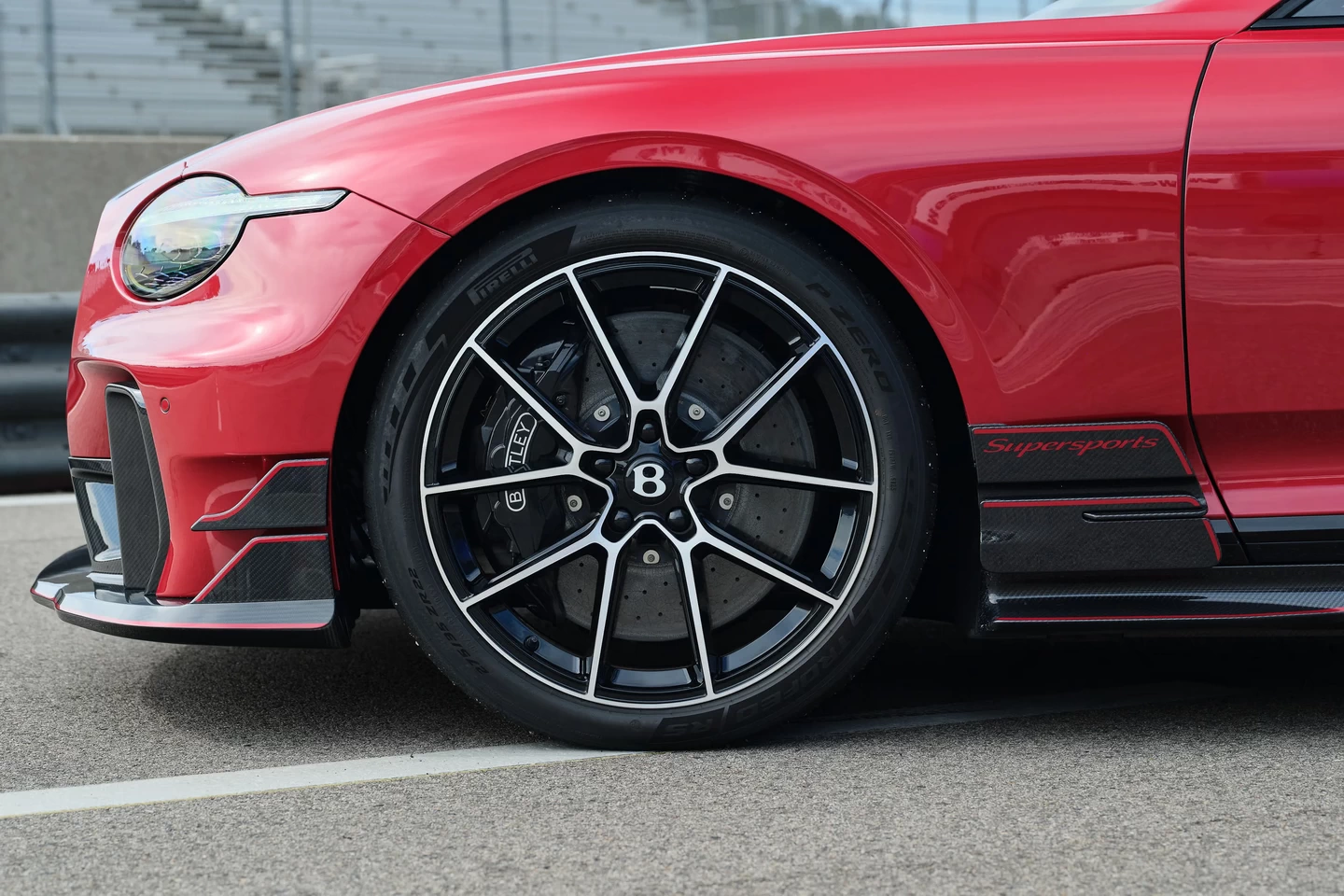
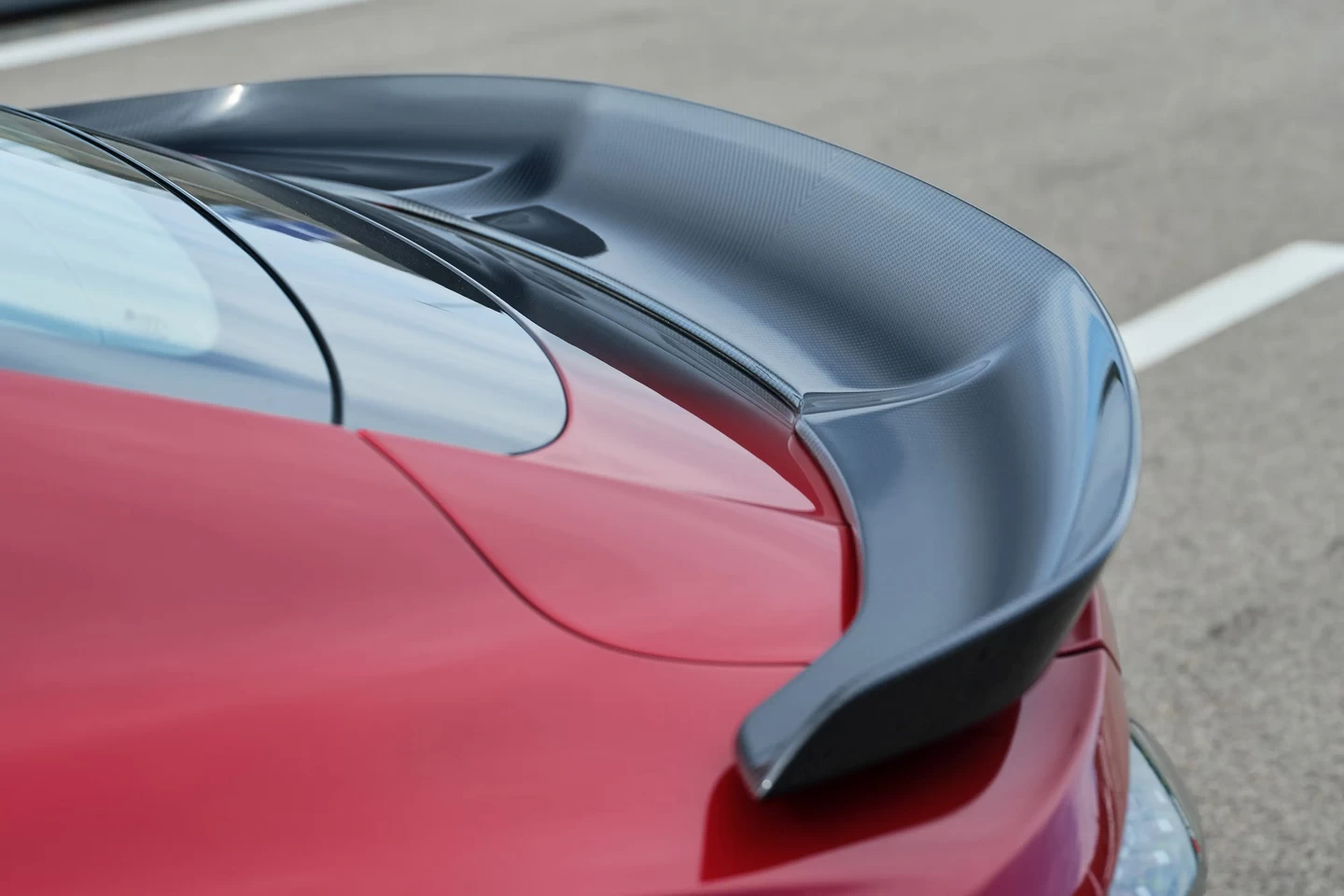
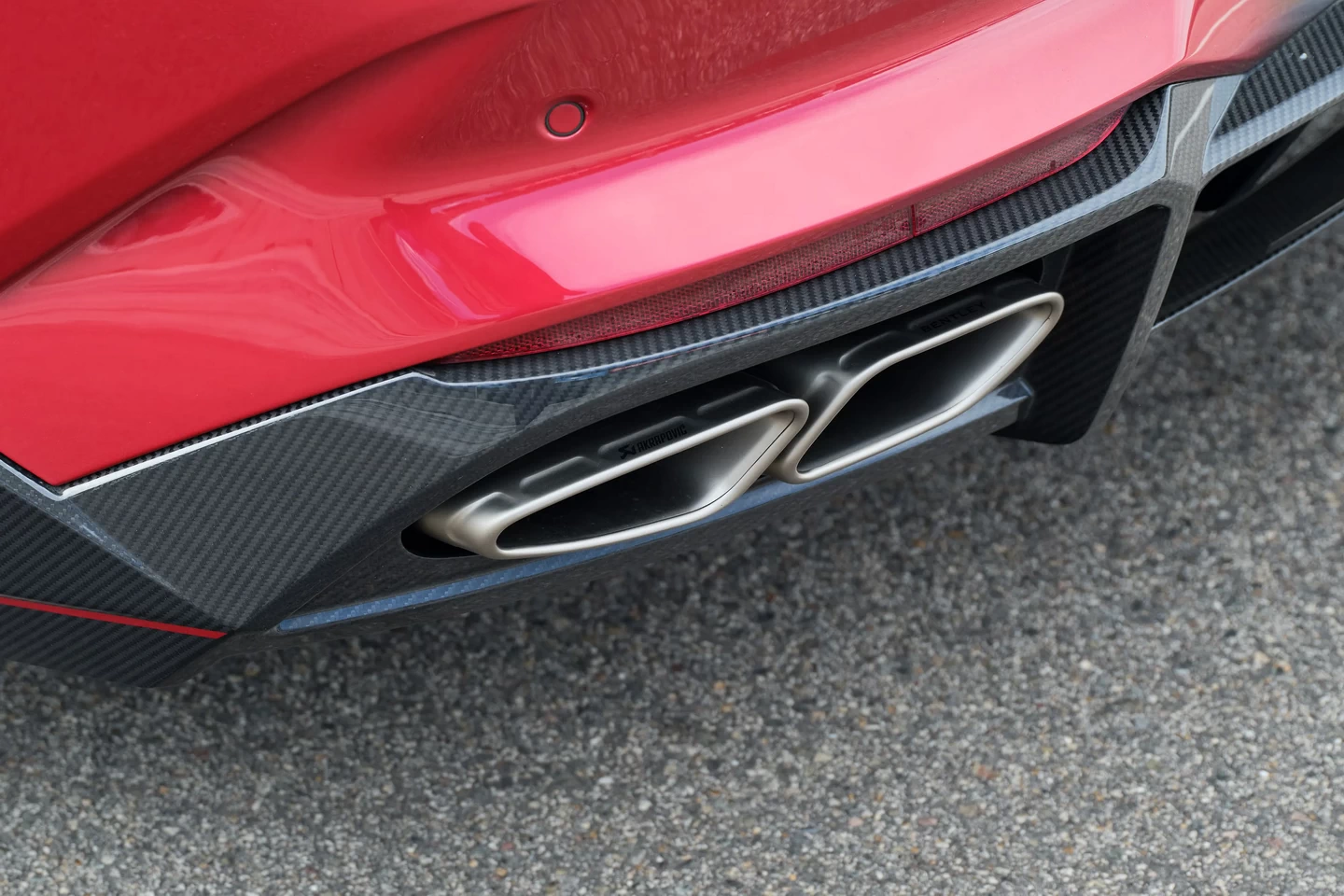
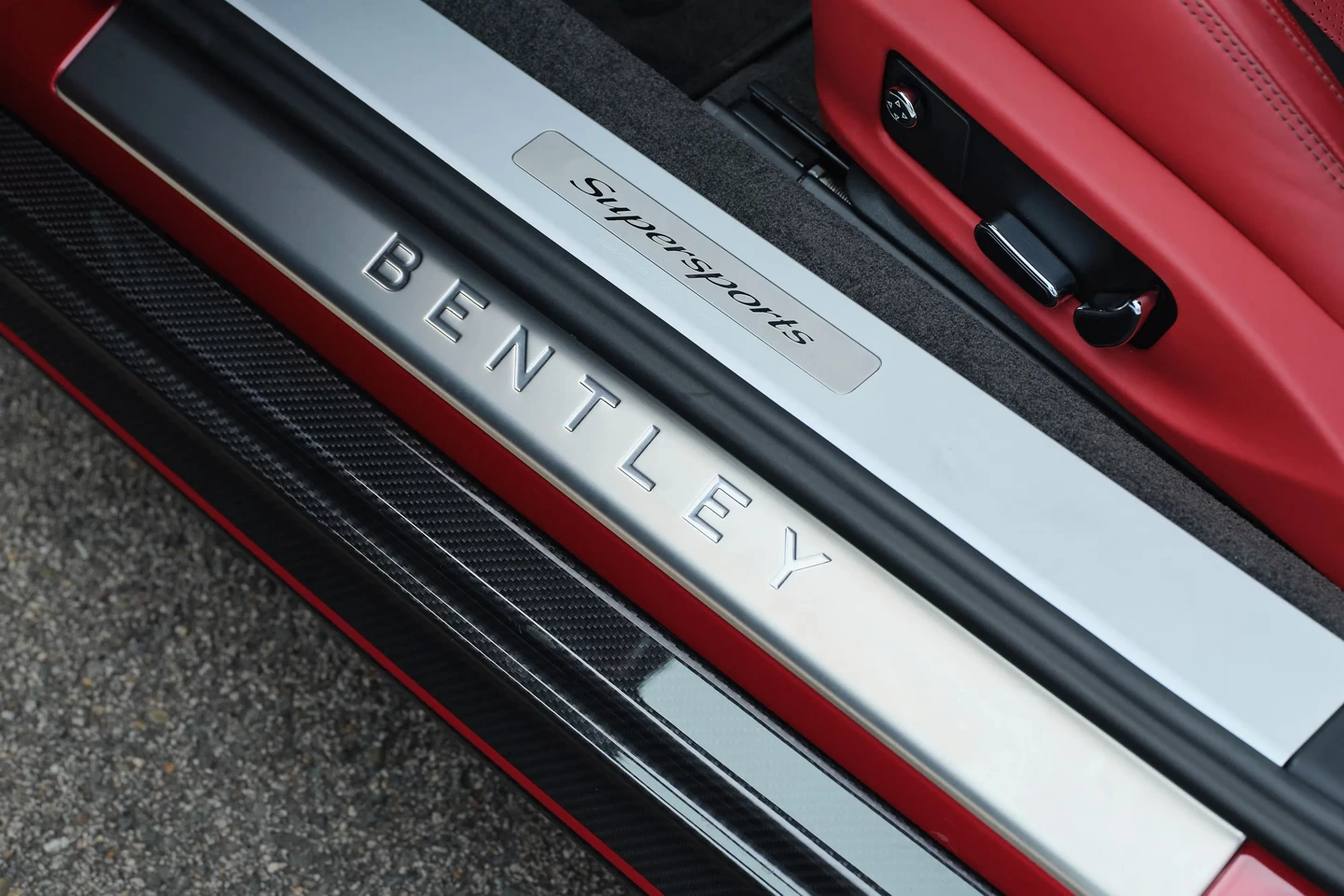
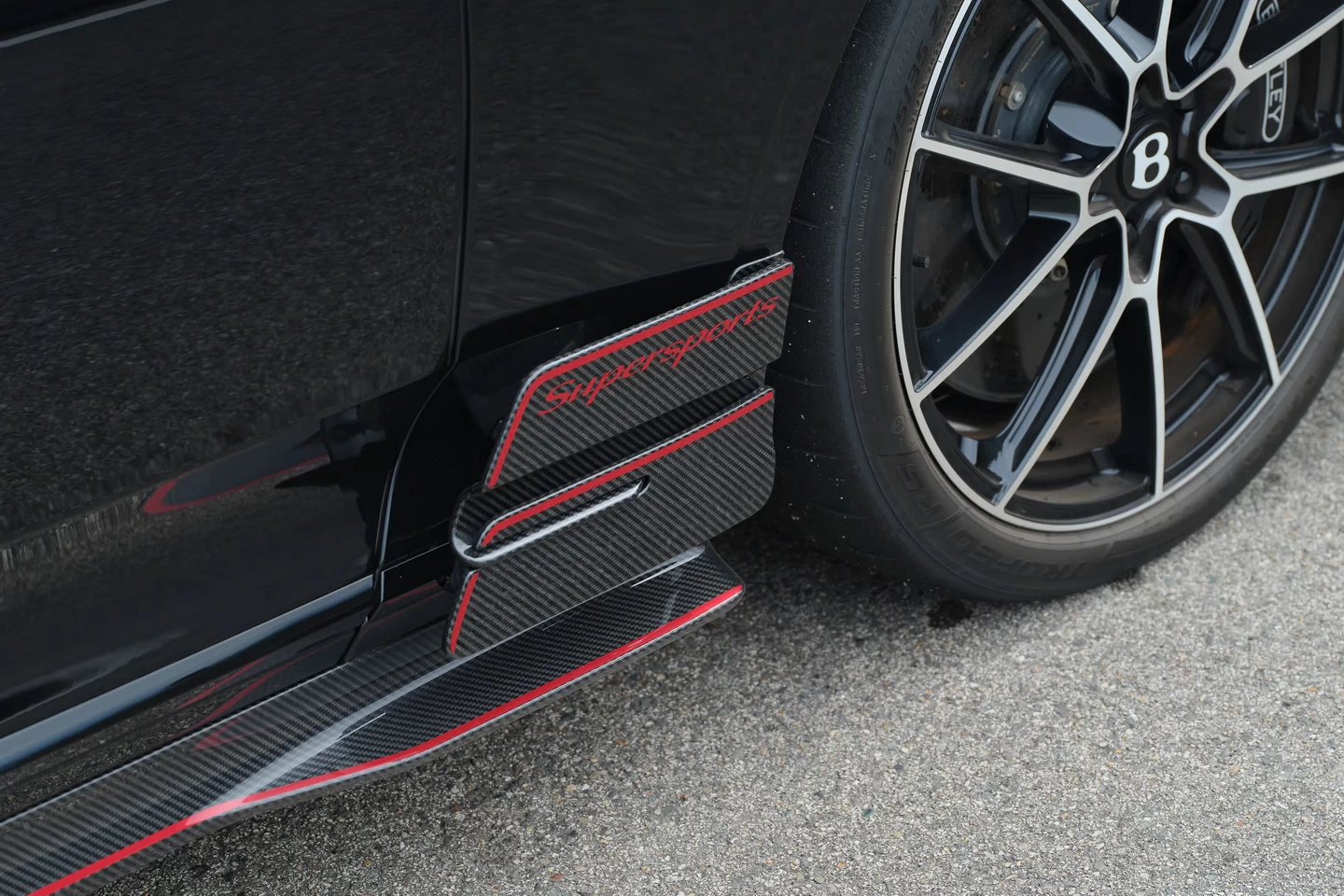
To help the Supersports look the part—and up its maximum aerodynamic downforce by more than 660 pounds over regular Contis—Bentley fitted a host of carbon-fiber pieces: deeper side sills, air-sculpting fender blades aft of the front wheels, a larger rear diffuser, and a fixed rear spoiler. Its roof also sports the carbon weave, and the redesigned front bumper dons larger cooling intakes, dive planes, and what Bentley says is the biggest front splitter it’s ever installed on a road car. Being a Bentley, the customization options are extensive, including bold exterior graphics and side-to-side color-fade paint jobs like on our photo car.
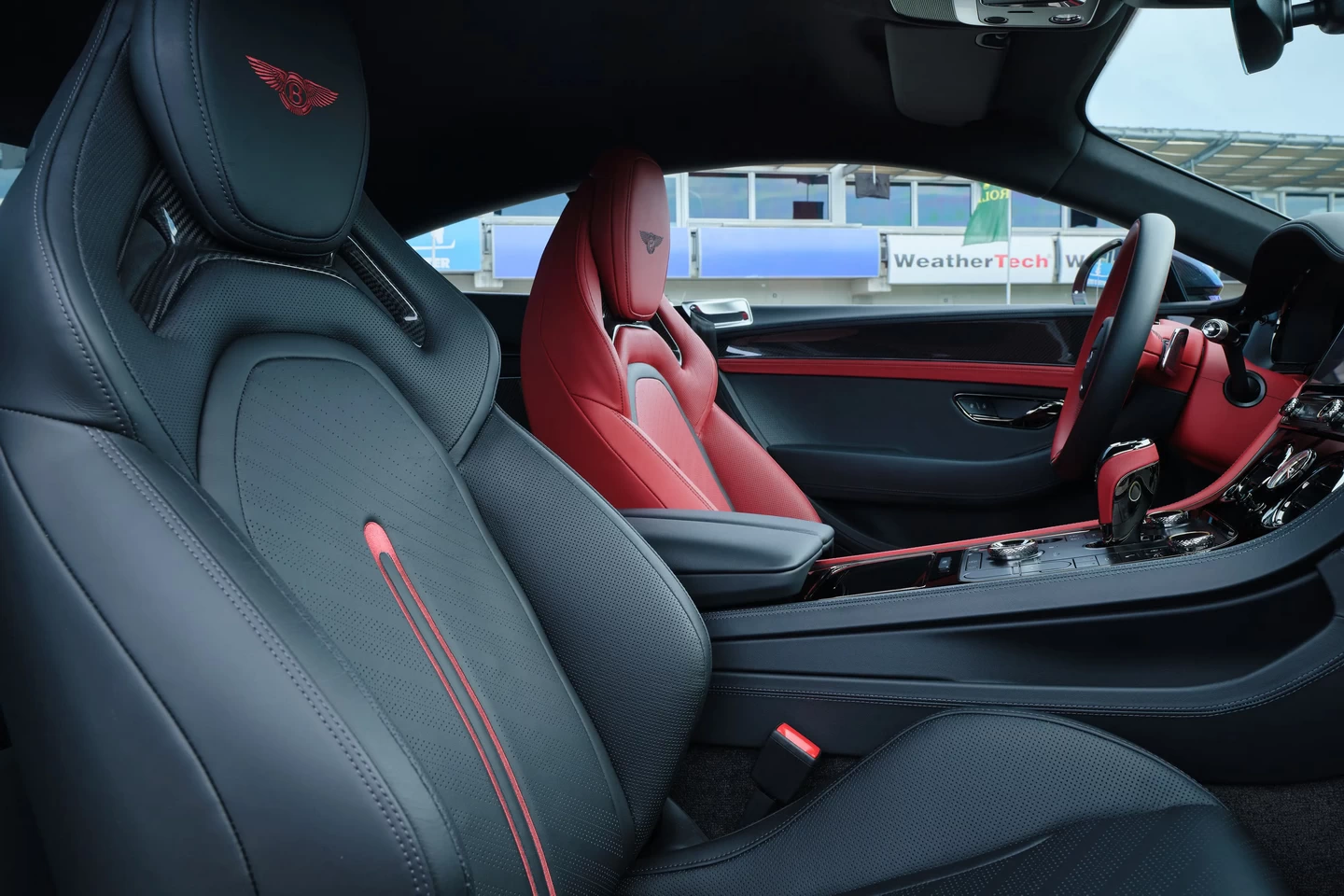
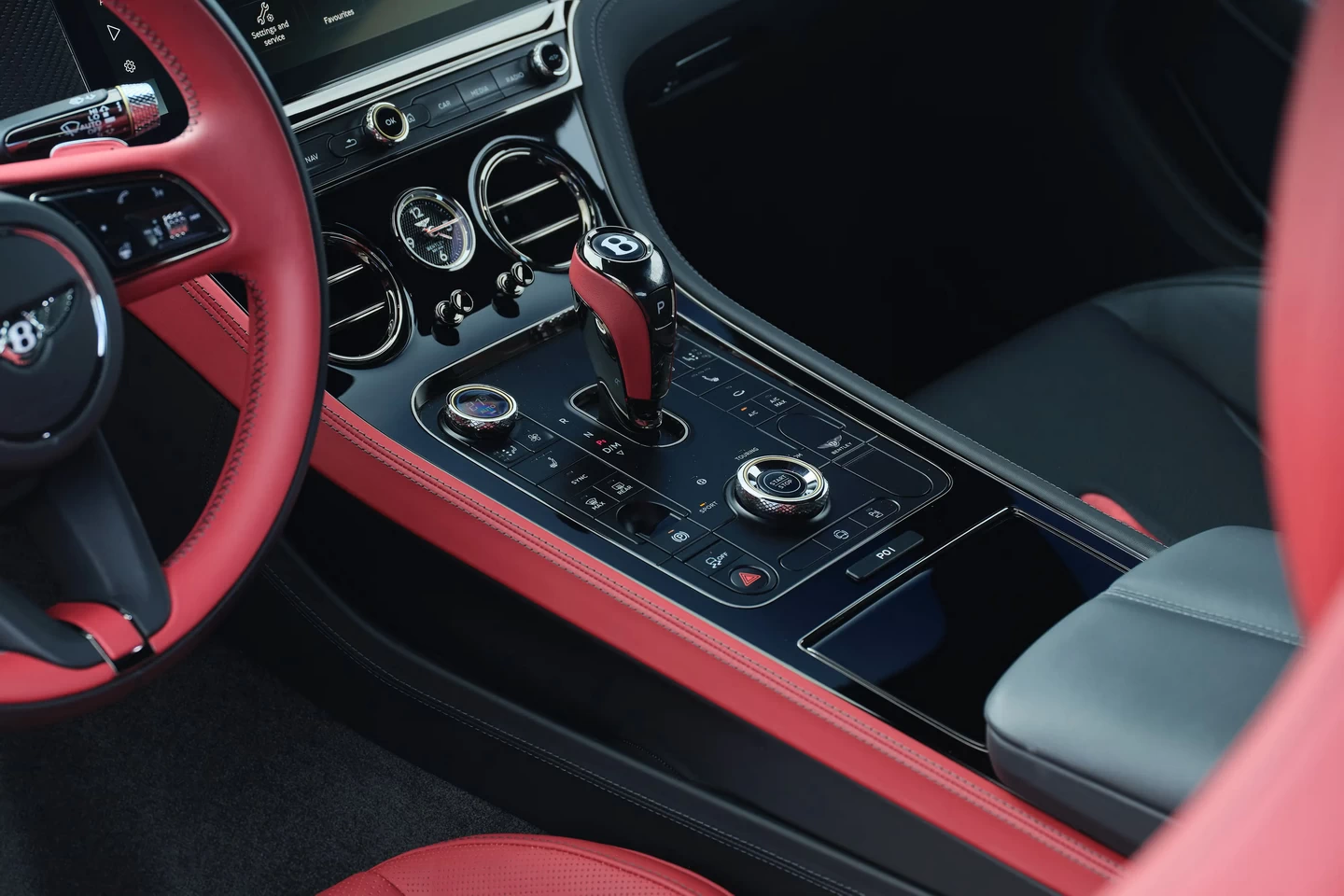
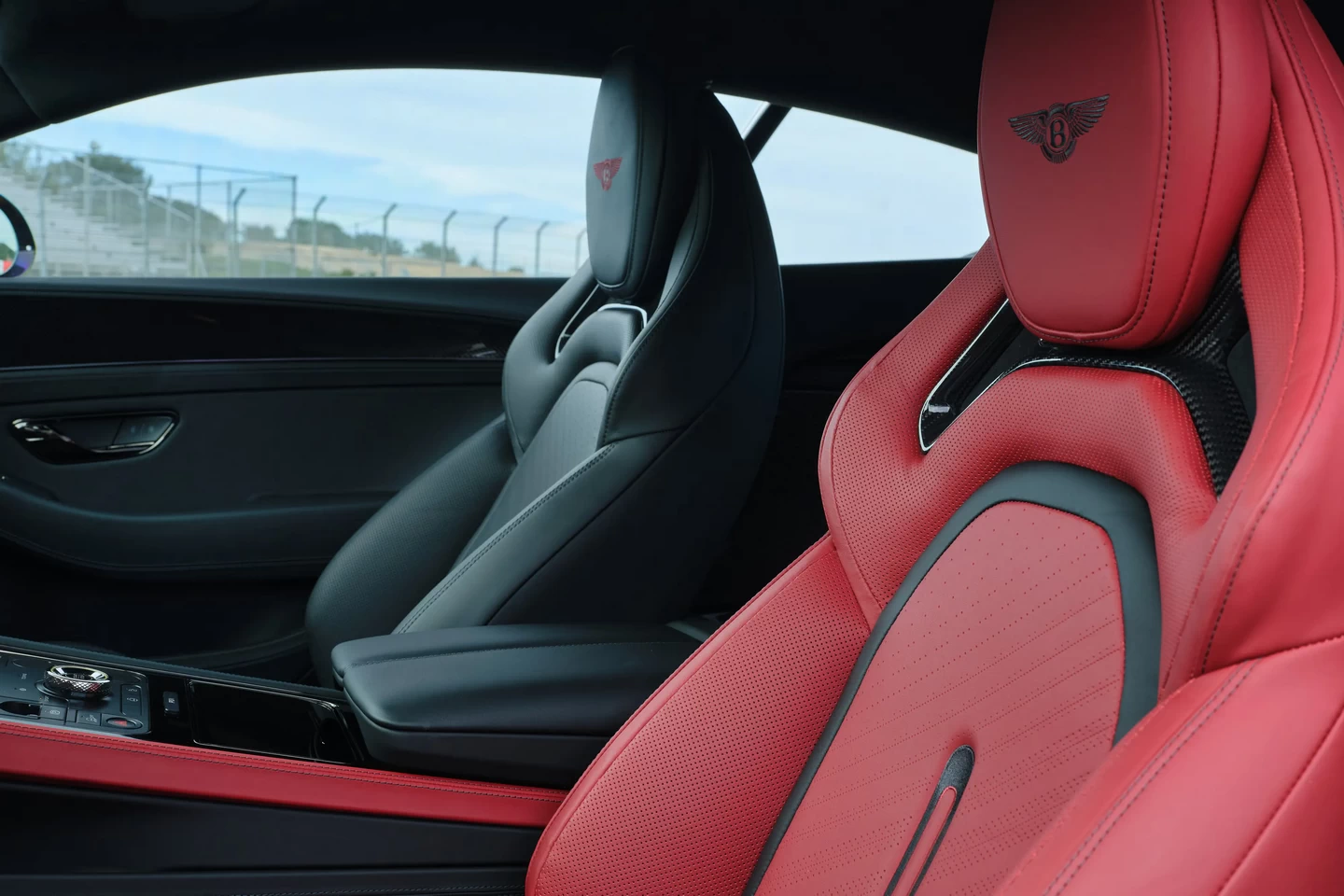
Despite losing its rear seats to a leather- and carbon-fiber-trimmed storage hold, the Supersports is as luxe inside as any other Bentley, with generous sound insulation, exquisite materials, and all manner of luxury accouterments. Its embracing performance chairs may be lighter and mounted closer to the floor, yet they retain heating elements and 11-way power adjustment. One of Bentley’s development parameters was for this car to remain comfortable enough to road-trip to track days. Which explains why its default Touring drive mode is relatively relaxed, picking up where the Continental GT Speed’s Sport mode leaves off. Only when you step up to its Bentley and Sport settings does it turn properly aggressive.
A Refined Brute
From what we can extrapolate from our limited time lapping WeatherTech Raceway Laguna Seca, the Supersports feels entirely domesticated. But it’s hardly soft when put to its intended use. Fire up its V-8, and an active Akrapovič titanium exhaust emits a baritone rumble that crescendoes to a brassy roar as the revs climb. On sound alone, this car makes quite an entrance.