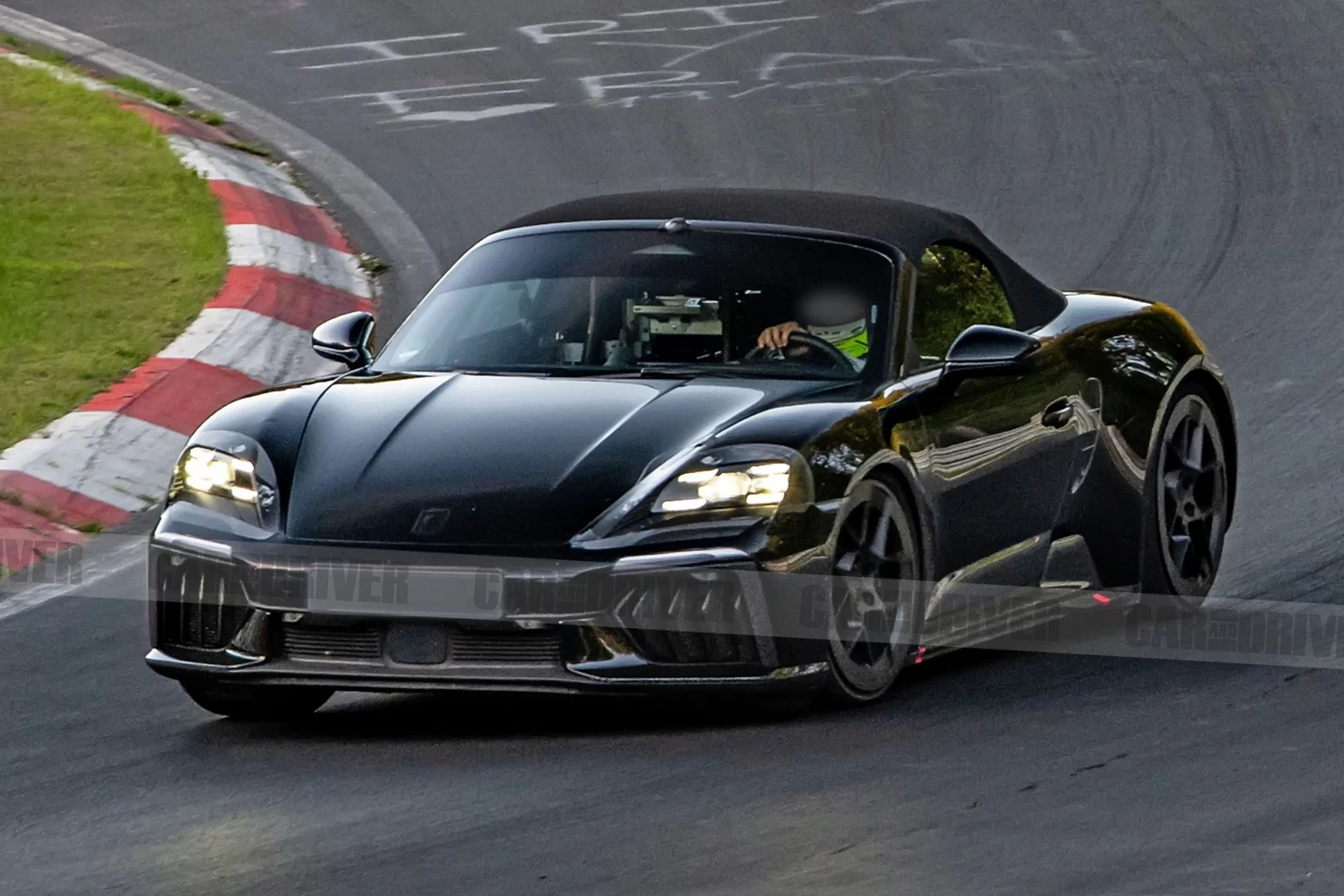
Despite several setbacks, development of the 2027 Porsche 718 EV continues to march along. New photos taken by our spy photographer captured a prototype of the upcoming electric Boxster testing at the Nürburgring. The photos are the best look yet that we’ve gotten of the next-generation 718, and show the car with nearly no camouflage hiding its bodywork.
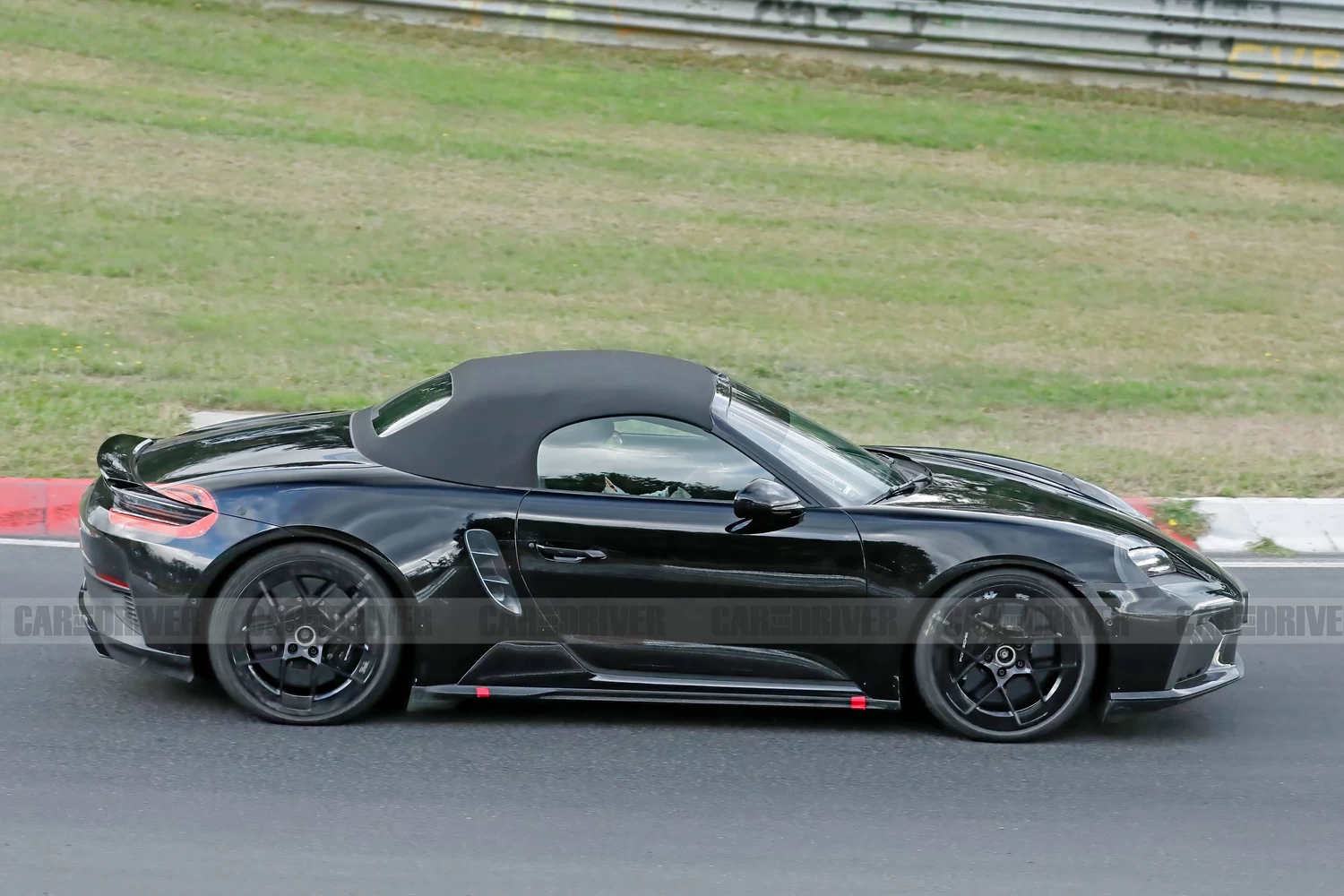
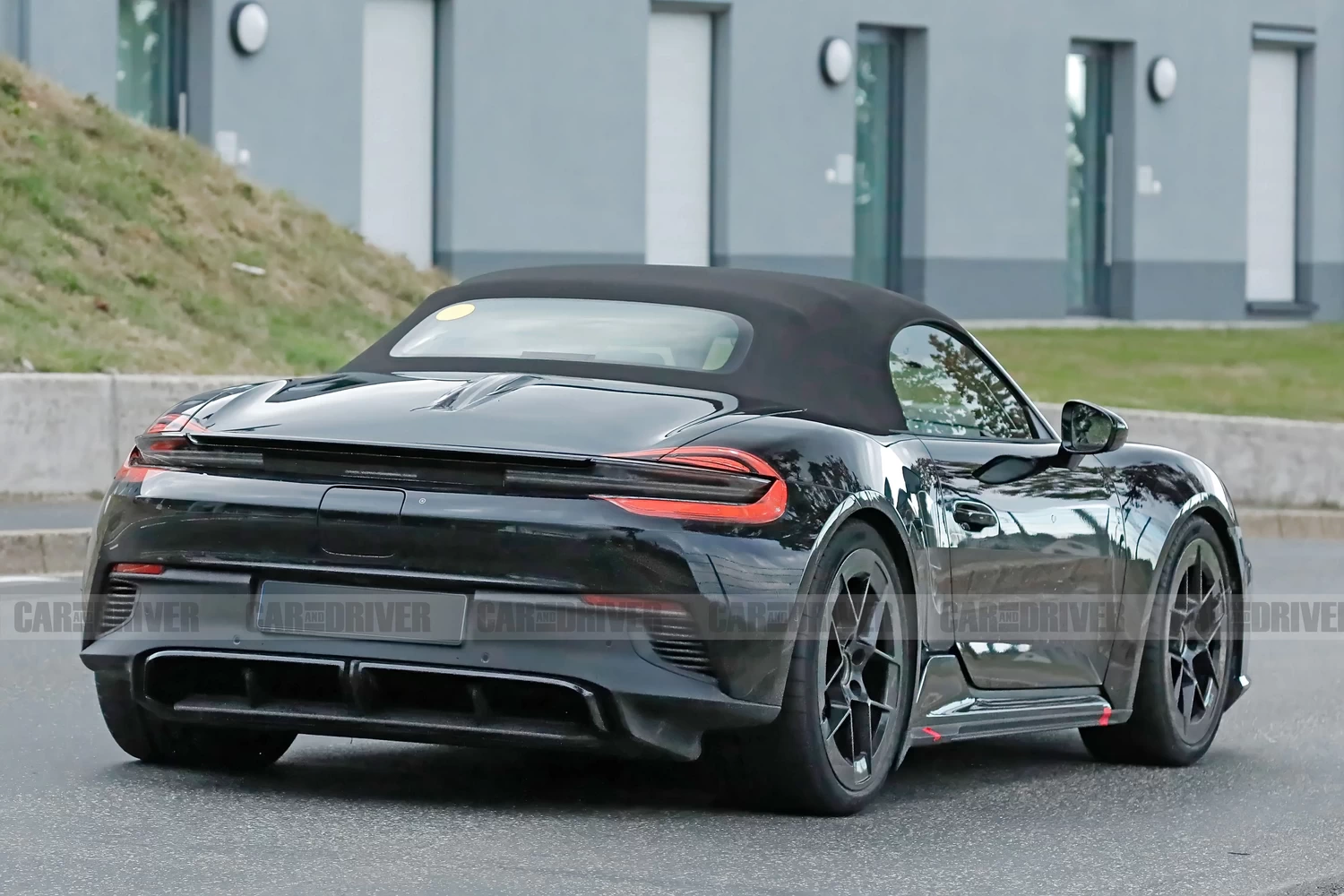
We’ve already seen photos of the upcoming electric version of the hardtop 718 Cayman—which you can check out here—but this is the best look we’ve had at the convertible Boxster variant. The drop-top model was seen testing in Germany with practically no camouflage, save for a bit around the headlights, and a wrap around the rear that seems to paint on faux taillights.
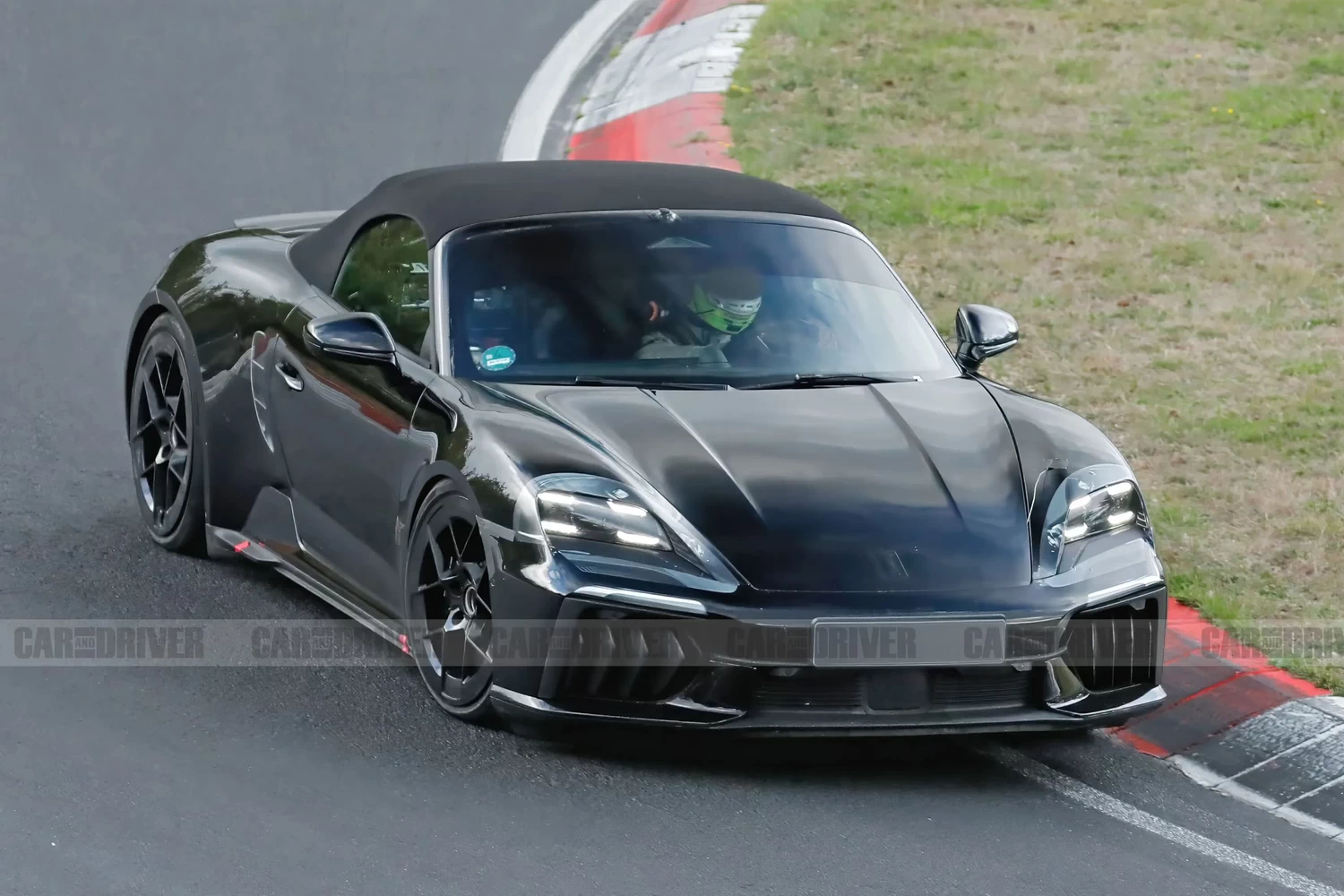
We’re still mostly stumbling around in the dark when it comes to information surrounding the 718 EV’s platform and powertrain, but we expect an 800-volt architecture and single- and all-wheel drive versions. The overall shape is strikingly similar to the most recent 718 generation, though with updated headlights and a new set of taillights that extend into the bodywork in a similar fashion to those found on the911.
We’ve been hearing about an electric Cayman dating all the way back to 2021, when Porsche revealed the Mission R concept. That car was never intended for production, and while the 718 EV models that were planned for customers should have arrived in 2025. . . that clearly didn’t happen. In fact, the delays became so significant that the internet rumor mill became convinced the models were scrapped entirely. Porsche CEO Michael Leiters set the record straight last month, and these new images affirm his position: the 718 EV is coming.
Now that we’ve seen how production-ready the prototype looks in these spy shots, it’s possible that after a development process that included stumbling over several bumps in the road, we could finally get the production version of the electric 718 as early as next year. Hopefully we don’t have to wait much longer to see its combustion twin, too.