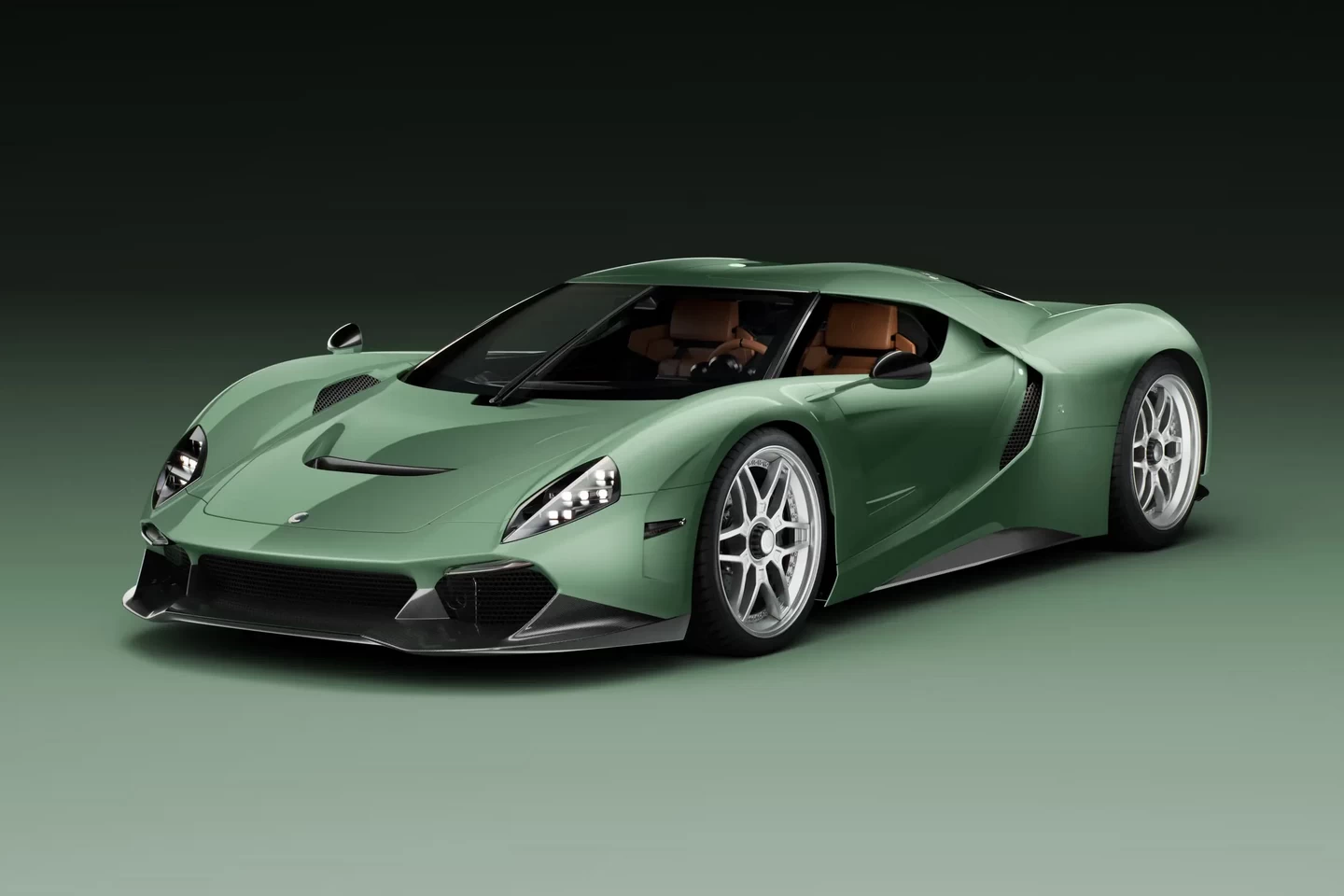
Italian design house Zagato has a rich history of crafting special vehicles based on the work of iconic automakers, from the sultry Aston Martin Vanquish Zagato to the scowling Alfa Romeo TZ3 Stradale. But now the coachbuilder has teamed up with a relative unknown, penning the sleek lines of the Capricorn 01 Zagato, a new hypercar that pairs an American V-8 engine with a five-speed manual transmission.
Capricorn Flexes Its Engineering Prowess
While you may not know the German engineering company by name, you’re likely familiar with Capricorn Group’s work. Capricorn has developed engine components for Bugatti models ranging from the Veyron to the track-only Bolide, designed aerodynamic pieces for the Audi R8, contributed to the dynamic rear wing on the latest Porsche 911 GT3 RS, and worked on parts for a variety of F1 and World Endurance Championship racing teams since the 1990s.
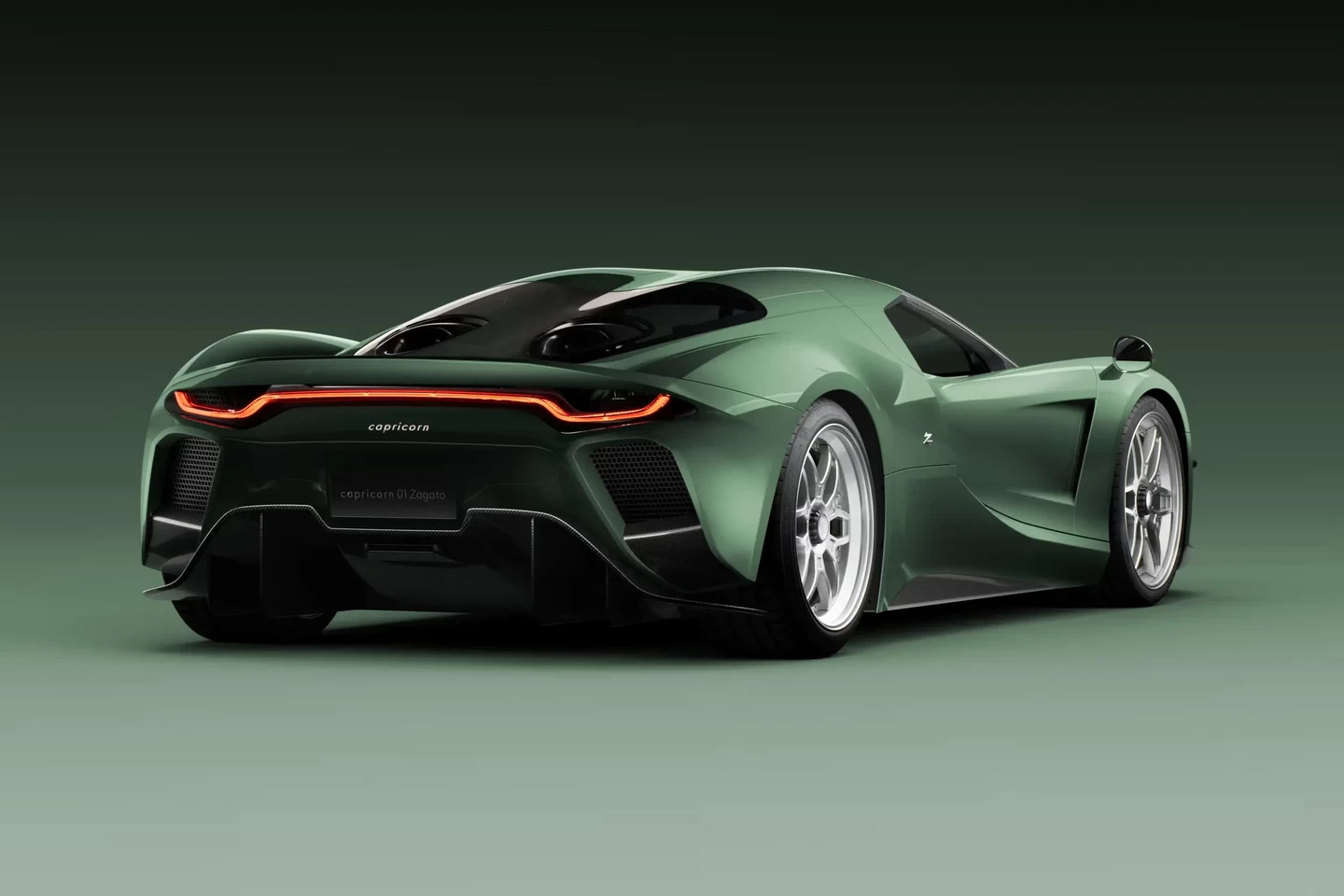
But now Capricorn wants to create something of its own, a hypercar to demonstrate the scope of its engineering capabilities. While the bodywork was designed by Zagato, the engineering and production are Capricorn’s responsibility, and the German company is focusing on driver engagement with a rear-wheel-drive, manual-transmission setup.
Nestled in the body is a supercharged V-8 engine, which started out as a 5.0-liter Ford unit before Capricorn bored it to 5.2 liters, added the blower, wrote its own ECU, and fitted a new crankshaft, rods, and pistons. The intake, exhaust, and dry sump lubrication system are also all new. Capricorn claims an output of 887 horsepower and 737 pound-feet of torque. The engine revs to 9000 rpm, and you’ll be able to have plenty of fun shifting at redline thanks to a dogleg five-speed manual transmission.
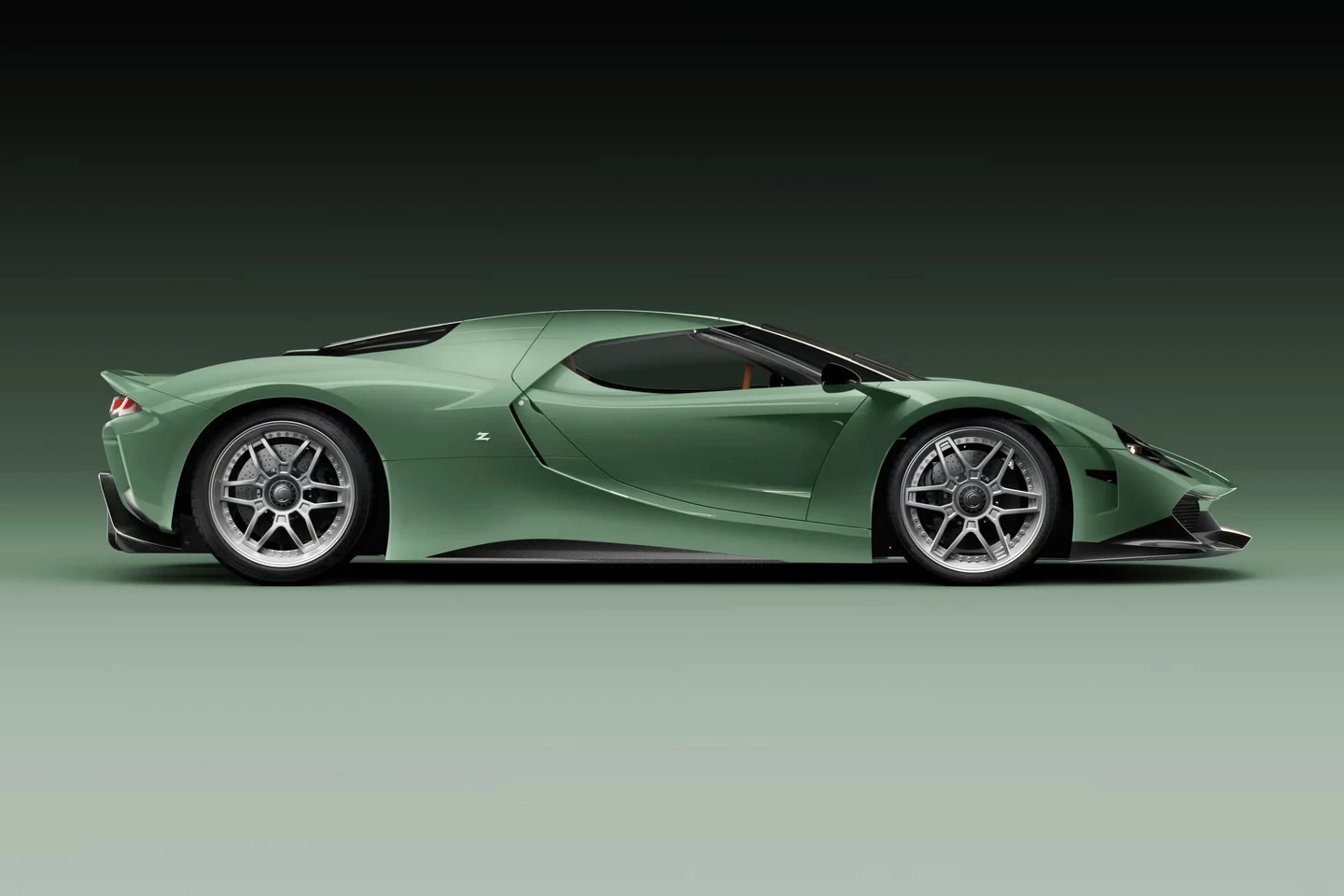
The center tub and front and rear subframes are all crafted from carbon fiber with a design inspired by LMP1 prototype endurance race cars. With a carbon-fiber body draped atop, the whole car is said to weigh less than 2645 pounds. Capricorn says the 01 will be able to blast to 62 mph in under 3.0 seconds, and claims a 223-mph top speed.
Stopping power is provided by a set of carbon-ceramic discs and six-piston calipers from Brembo. The pushrod suspension uses unequal-length control arms, and the anti-roll bar, springs, and dampers are sourced from Bilstein.
A Streamlined Look and a Classic Cabin
Visually, the Capricorn 01 doesn’t have the most distinctive design, especially in an era where it feels like a new exclusive hypercar debuts every month. The styling is sleek, with pointy headlights, a balanced stance, and plenty of vents and ducts dotting the exterior. The taillights consist of a thin, curvy LED line, and Zagato’s signature double-bubble roof is, of course, present. A sizable intake sits just behind the door, tucked into a C-shaped buttress that has a slight hint of the 2017 Ford GT. There are no large wings, with Capricorn instead opting to create downforce via the floor, aided by a front splitter and rear diffuser, but, as with any true hypercar, a set of gullwing doors provide plenty of drama.
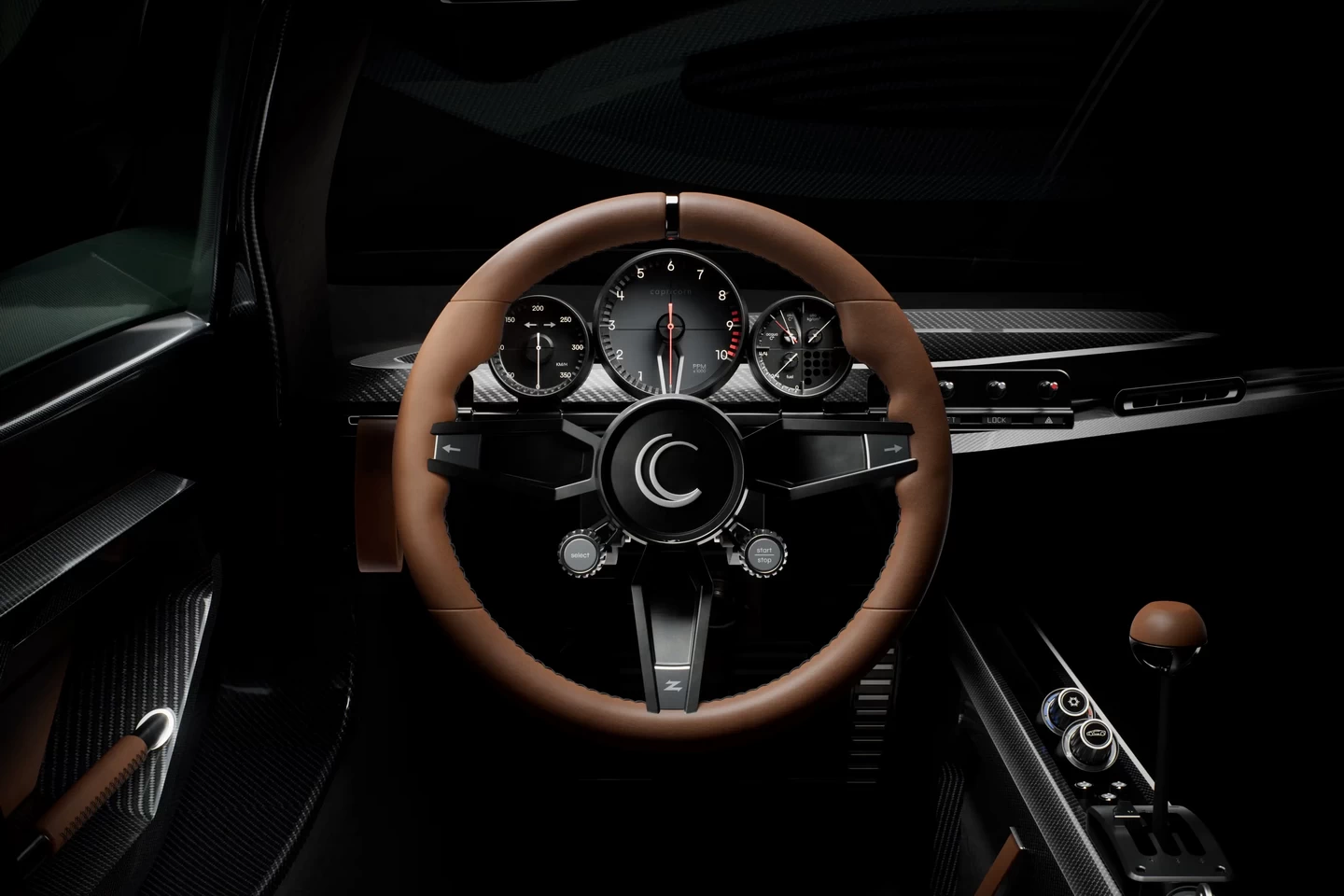
The cabin takes an analog approach, with a simple steering wheel wrapped in brown leather and carrying two dials. The dashboard is focused, with just three physical gauges behind the wheel—featuring a centrally mounted tachometer— and a small number of buttons on the center console. The middle dial also hides a screen to display the backup camera.
The switchgear is machined from solid titanium and aluminum, while the leather seats are accented by Alcantara trim elsewhere. The fixed-position seats have four-point safety harnesses, and, along with an adjustable steering column and pedals, the gear lever can slide 3.1 inches forward and back to help the driver find the ideal driving position.
Capricorn will build just 19 examples—a reference to Zagato’s founding date of April 19, 1919—with prices set at around £2.5 million, roughly $3.3 million at current exchange rates. Production is set to start in the first half of next year, with the 01 offered to customers in Europe, Japan, Mexico, Canada, and the Middle East. But the Capricorn 01 is just the start, as the company says it will expand its manufacturing facility near the Nürburgring so that future products can be built in batches of 100 to 200 cars per year.