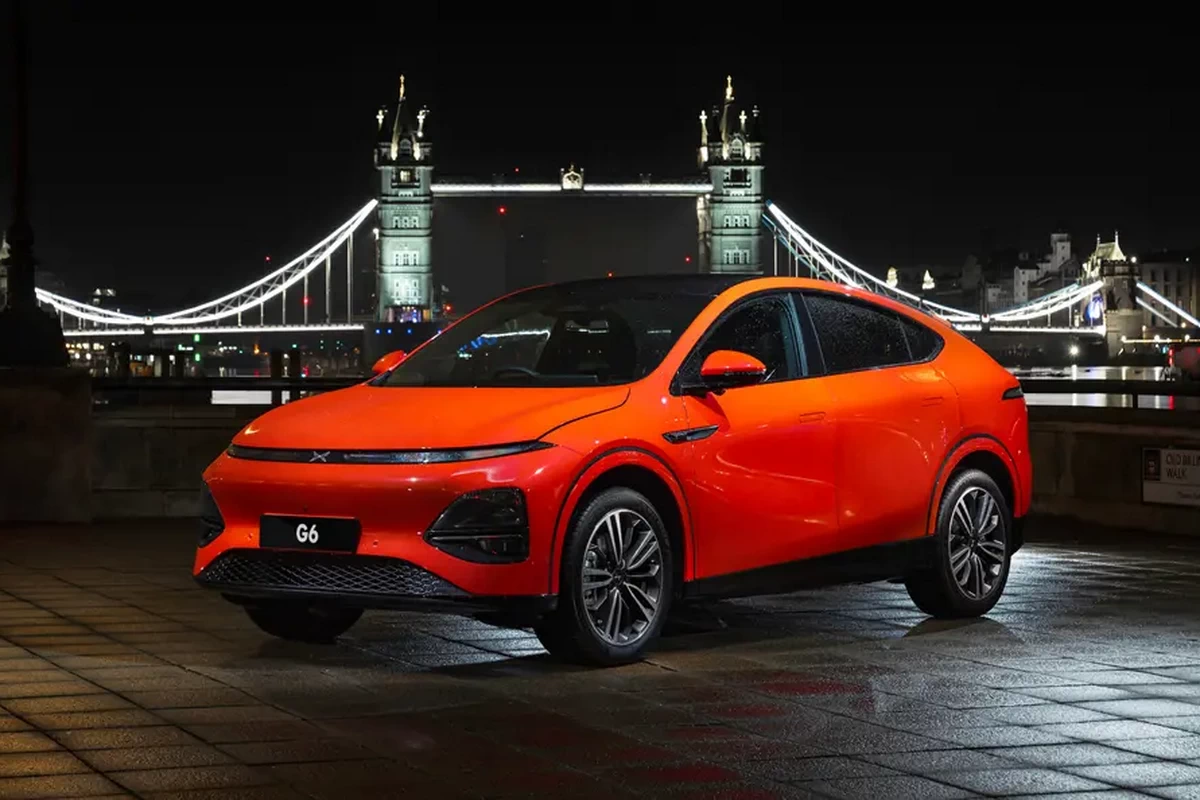
Almost half of UK drivers would consider buying a Chinese car for their next vehicle, according to new research from automotive marketplace Carwow, as awareness of Chinese brands and customer enquiries continue to rise.
According toCarwow’ssurvey, 49% of UK drivers would now consider a Chinese brand, up from 39% in the second half of 2025 and 35% in the first half of 2026. In the first half of 2023, the figure stood at 24%, meaning consideration has more than doubled in roughly three years.
Consumer sentiment also shows up in activity on Carwow’s platform. Enquiries for Chinese models increased 119% during the first seven months of 2026 compared with the same period in 2025. Chinese brands accounted for 30% of leads in the first half of 2026, up from 14% in the same period last year, the company said.
Value for money was the most commonly cited reason for considering a Chinese car, selected by 42% of respondents, up from 36% in the first half of 2026. Another 24% pointed to an expectation of competitive discounts.
Brand awareness has also increased as more Chinese automakers enter the UK market.
Awareness of Jaecoo rose from 46% to 69% over the past year, while Chery increased from 16% to 50%. Omoda rose from 42% to 57% over the same period.
BYDremains one of the most widely recognised Chinese carmakers in the UK, with 71% of respondents saying they were aware of the brand, compared with 28% in 2023.Awareness ofXpengincreased from 8% in 2023 to 20%.
Meanwhile, the proportion of respondents who said they had not heard of any of the Chinese brands listed in the survey fell from 23% in the second half of 2025 to 16%.
“The dramatic increase in UK drivers considering Chinese brands on our platform isn’t just about cost-of-living pressures or lower price tags, it’s a shift in how people think about their cars,” said Ben Carter, Carwow’s chief customer, marketing and media officer.
The increase comes as the number of Chinese brands available in Britain continues to grow. BYD began UK passenger-car sales with the Atto 3 in March 2023, while brands including Chery, Omoda, Jaecoo and Xpeng have since expanded their presence. SAIC-owned MG, meanwhile, is already well established in the market. The MG4 was the UK’s second most-registered all-electric car in 2023, with 21,461 registrations.
The UK also differs from the European Union in how it treats Chinese-made electric cars. The EU introduced additional countervailing duties on China-made battery electric vehicles in October 2024, ranging from 7.8% to 35.3% depending on the manufacturer. BYD is subject to a 17% additional duty, Geely to 18.8% and SAIC to 35.3%.
Britain has not yet introduced equivalent duties. As of July 2, 2026, the UK government said the Trade Remedies Authority had not opened an investigation into Chinese electric vehicles, although it was still assessing possible measures.
Steve Walker, head of digital content at Auto Express, compared the arrival of Chinese brands with the earlier expansion of Japanese and Korean manufacturers in Britain, saying Chinese cars were competing strongly on value for money and putting additional pressure on established brands.
Editor’s comment
The Carwow figure should be treated for what it is: a measure of consideration rather than actual purchasing decisions. A driver saying they would consider a Chinese car does not mean they will ultimately buy one.
Still, the speed of the change is notable. Carwow’s figures show consideration rising from 24% in the first half of 2023 to 49% today.
Changing perceptions of an unfamiliar or poorly regarded automotive brand has historically taken considerably longer in the UK. Škoda is a particularly relevant example. The Czech automaker, acquired by VW in 1991, spent much of the following decade trying to overcome its reputation in Britain. That was difficult, as jokes such as Why do Škodas have heated rear windscreens? (To keep your hands warm while you’re pushing it.) or What do you call a Škoda driver who says he’s had a speeding ticket? (Liar) were still around in the early 2000s. Now it’s one of the most reputable brands in its segment.
Asian brands had a similar hurdle to overcome in the UK (and globally), and in many cases it took even longer – Toyota in the 70s, Hyundai in the 80s and Kia in the 90s could tell.
Chinese automakers appear to be overcoming the unfamiliar-brand barrier considerably faster. That does not necessarily mean British consumers already view Chinese marques on the same level as established European, Japanese or Korean brands. Still, the Carwow data suggests that Chinese origin itself is becoming a much smaller obstacle to getting onto a buyer’s shortlist.
Will this translate into sales? We will keep an eye on it.