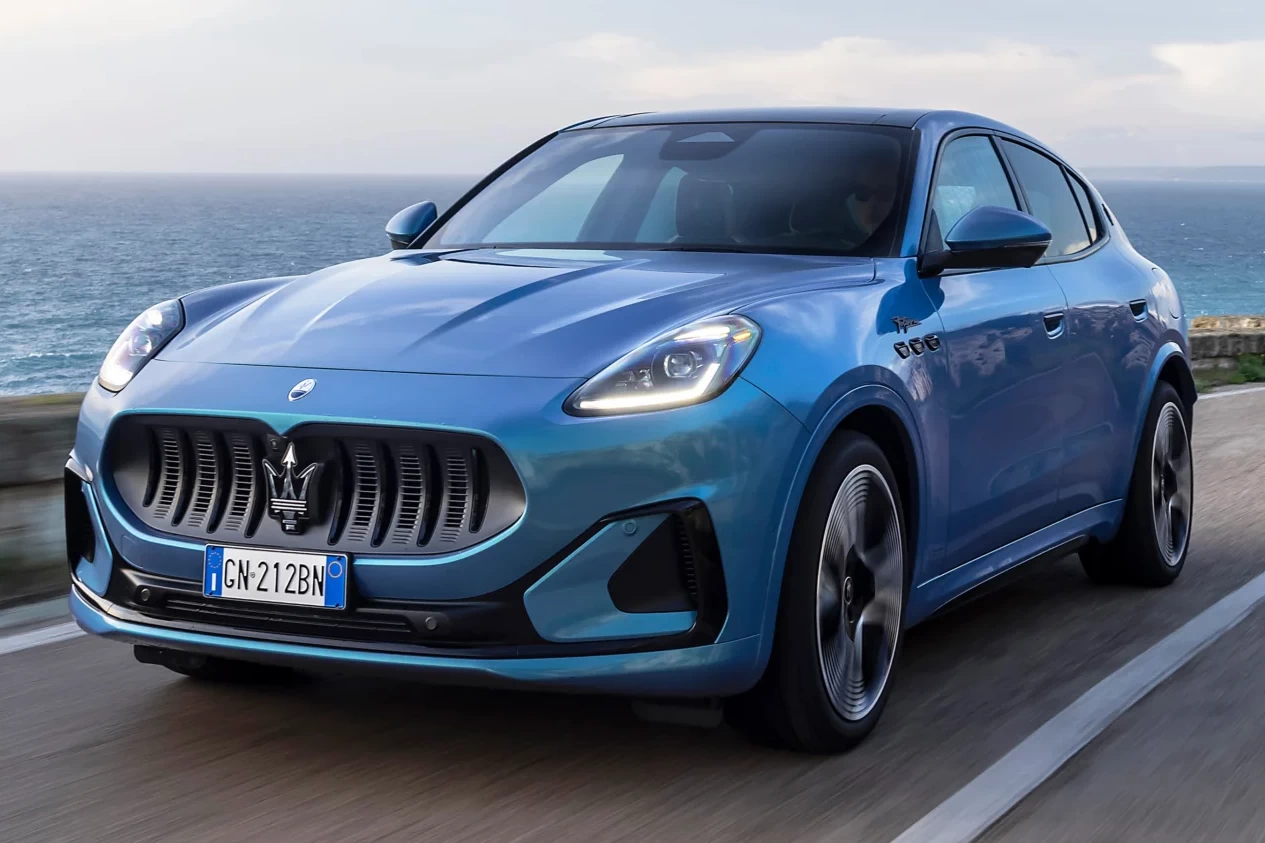
Maserati’s pivot to revitalise its brand through a partnership withHuaweiandJACMotors is moving from concept to concrete planning. According to industry sources quoted byFuture Cars Daily, the Italian luxury automaker has finalised plans for two new electric vehicle (EV) models: a mid-to-large-sized pure electric SUV and a large pure electric GT.
These vehicles are designed to address specific market gaps: the SUV will serve as a strategic supplement to the existing Grecale Folgore, while the GT model is intended to reinforce the brand’s core identity and athletic heritage, building upon the foundation of the GranTurismo Folgore. Insiders suggest to Future Cars Daily that internal discussions currently favour launching the pure electric GT as the first product of this collaboration.
A three-way alliance
This partnership represents a restructuring of technology, manufacturing, branding, and distribution:
Huawei:Provides the Harmony Intelligent Mobility Alliance (HIMA) platform, including the intelligent cockpit, Qiankun ADS autonomous driving system, and electric drive technology.
JAC Motors: Leverages its Maextro super factory to handle vehicle engineering and manufacturing.
Maserati: Contributes its century-old design language and established global sales channels.
Under a “dual-brand” strategy, the vehicles will be sold under the Maextro brand in China, while retaining the iconic Maserati badge for international markets.
Global strategy and SKD production
To balance cost-efficiency with the preservation of its luxury heritage, Maserati plans to utilise a Semi Knocked Down (SKD) export model. Under this arrangement, “white bodies” (unpainted vehicle frames) will be manufactured at the JAC facility in Hefei, China, before being shipped to Italy for final assembly, including luxury interior installation and chassis calibration.
Sources indicate that Maserati retains significant decision-making power regarding international distribution, with the Middle East, Italy, France, and Germany identified as the initial target markets. This strategy is also intended to revitalise production resources at Maserati’s historic Cassino and Modena plants.
This collaboration arrives at a critical juncture for Maserati. In 2025, the brand’s global shipments fell below 8,000 units – an 80% decline from its 2017 peak and the lowest level in over a decade. Financial performance has been equally challenging, with an adjusted operating loss of 198 million euros and a profit margin of -27.3%.
Stellantis CEO Antonio Filosa has previously acknowledged the need for industrial partners to secure the brand’s future without resorting to a sale. By integrating Huawei’s intelligent technology and JAC’s manufacturing capabilities, Maserati aims to overcome its current limitations in R&D and digital transformation, hoping to restore its lustre in the global luxury market.
JAC is a carmanufacturerbased in Hefei, China, which has become well known in recent years for producing the high-endMaextrocars for Huawei’s HIMA.